Himalaya Watch

People, issues. Debates, perspectives. Details, nuances. A crisp view from the top.

Visit the new professional website of Jiwan Kshetry

Showing posts with label Bangladesh. Show all posts

Saturday, July 2, 2016

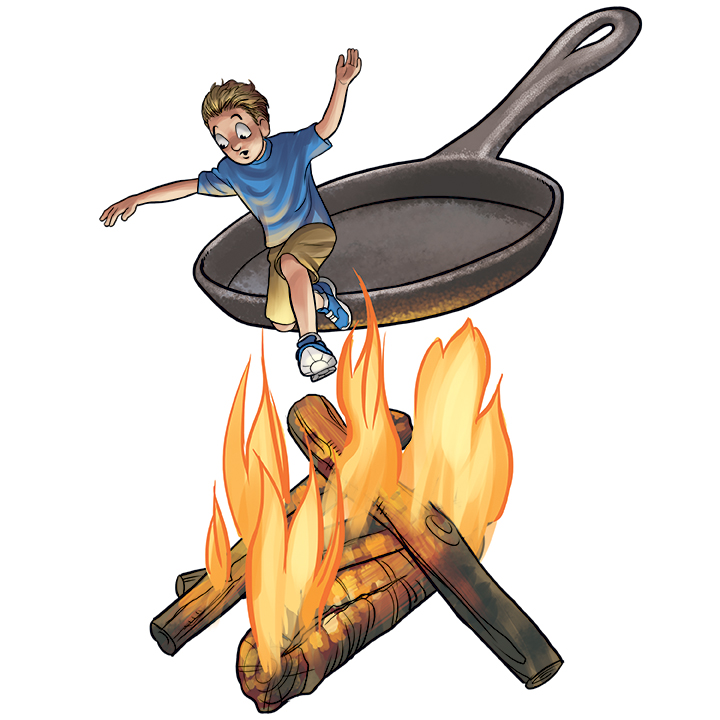
Bangladesh after Gulshan attacks: From the frying pan and into the fire

Photo credit: Weed activist
More than two years ago, at the time of the lopsided general elections in Bangladesh, Victor Martin, a Spanish journalist, had taken a brief email interview with me. It was like this:

Is this a real democratic process if the opposition is not going to play in 154 seats?
Theoretically, and what they say ‘constitutionally', yes. But practically no, as the things stand today.
This election had low participation. For you, which is the reason? Is the (non) security or is because the people just can vote one party and they don’t want to do it? What do you think?
Both reasons are partially valid. But I think the people are increasingly losing faith towards both the political parties as well as the system itself. The major motive of voters in any election is that the votes they cast will bring about some tangible positive changes in their lives. When they see the whole political practice as a farce played to ensure the personal gains and to feed the ego of the leaders (the PM Hasina and Opposition Leader Zia in this case) there is no genuine motivation for going to caste the votes. Also, unlike the committed voters of the ruling Awami League, a large section of so called ‘swing voters’ were never ready to take the risk of getting injured or even death for merely casting votes in an election of questionable legitimacy. I think this was one of the reasons behind the low voter turn out.
In this elections, the question is not who is going to win; the question is what’s going to happen tomorrow? Is the violence growing up? The country is now polarized, is this situation going to a worse way? What can we expect?
Going by the events so far, situation is all set to worsen over days to weeks. The stakes are high for both the sides and a stalemate is likely to prevail thereby draining the economy and further alienating the common people. Apparently, the AL once overestimated the mandate it got during the last polls and has behaved with overconfidence. That seems all set to backfire now. Its capacity to control the developments after this election will be limited. For the opposition, this is do or die situation: there is no recourse left except paralyzing the country if they are to exert their influence in any way in the new situation. A quagmire is thus a given for the short term future. If past is any guide, the army may have to be called to control the situation. Far less likely is the situation in which the AL successfully handles the election fallout to retain power for long enough.

Excerpt from this was carried in a report by Martin in Spanish newspaper El Mundo. 

Looking back, it seems I had the foreboding about the things to come but my calculations have proved to be upside down.

Tuesday, January 28, 2014

Compromise the least evil for rivals in Asia

(First published in Setopati as Thailand to Bangladesh: Worrisome trend for democracy in Asia)

If history is any guide the rival sides in the snowballing conflicts in Asia, both domestic and international,  have much more to lose from the continuing friction and stalemate. While Sino-Japanese rivalry risks upsetting the relatively stable international order, the boiling conflicts in Bangladesh and Thailand risk undermining the democratic institutions in each with lasting implications in each case.
 
With the outbreak of grisly conflicts in the Central African Republic and South Sudan, the year 2014 has been welcomed very bleakly in the African continent. As such, given the deadly combination of the legacy of an ugly and complicated colonial past and the present-day rush of every competing side to get the bigger pie of the mineral wealth, Africa is finding it rather difficult to dissociate itself from long running conflicts.

But having the overt wars in two nation states simultaneously is far worse than having a lingering presence of low-intensity conflicts in various parts. Keep this in the context of the continuing chaos in Mali, Somalia and host of other African countries and a very ominous picture of African continent emerges.


On comparison, Asia with some of the most prominent emerging powers in the world, has had a different historical trajectory so far in terms of overt conflicts. The major conflicts of the past decade and half in Afghanistan and Iraq, while definitely no less lethal in terms of death and destruction than the present day conflicts in Africa, were of a different nature for having been instigated by a foreign power. Troubling fact is that both in Afghanistan and Iraq today, the long running and currently deteriorating conflicts are increasingly being defined across the ethnic/sectarian faultlines. 

Tuesday, January 7, 2014

Bangladesh after polls: From the frying pan and into the fire?

The political stalemate in Bangladesh has entered a new phase with the 5 January polls that were boycotted by the opposition and have been labeled as most violent and noticed for one of the lowest voter turn out in the electoral history of Bangladesh. 

In the evening of the poll day, I was asked for a brief assessment of the situation by Victor Martin, a Spanish journalist in Delhi. Some of my statements made way to the report he got published in Spanish newspaper El Mundo. Here is the original exchange from which the readers can have a clearer glimpse of my opinion in the whole affair. 


Is this a real democratic process if the opposition is not going to play in 154 seats?

Theoretically, and what they say ‘constitutionally, yes. But practically no as the things stand today.

This election had low participation. For you, which is the reason? Is the (non) security or is because the people just can vote one party and they don’t want to do it? What do you think?

Both reasons are partially valid. But I think the people are increasingly losing faith towards both the political parties as well as the system itself. The major motive of voters in any election is that the votes they cast will bring about some tangible positive changes in their lives. When they see the whole political practice as a farce played to ensure the personal gains and to feed the ego of the leaders (the PM Hasina and Opposition Leader Zia in this case) there is no genuine motivation for going to caste the votes. Also, unlike the committed voters of the ruling Awami League, a large section of so called ‘swing voters’ were never ready to take the risk of getting injured or even death for merely casting votes in an election of questionable legitimacy. I think this was one of the reasons behind the low voter turn out.

विजय कुमारको खुशी पढेपछि

जीवन, खुशी अहंकार

जीवनमा अफ्ठ्यारा घुम्तीहरुमा हिंडिरहँदा मैले कुनै क्षणमा पलायनलाई एउटा विकल्पको रुपमा कल्पना गरेको थिएँ, त्यसलाई यथार्थमा बदल्ने आँट गरिनँ, त्यो बेग्लै कुरा हो त्यसबेला लाग्थ्योः मेरा समग्र दुखहरुको कारण मेरो वरपरको वातावरण हो, यसबाट साहसपूर्वक बाहिरिएँ भने नयाँ दुख आउलान् तर तत्क्षणका दुरुह दुखहरु गायब भएर जानेछन् कति गलत थिएँ !


Read more from Dashain Issue

Debating partition of India: culpability and consequences


Read the whole story here

Why I write...

I do not know why I often tend to view people rather grimly: they usually are not as benevolent, well-intentioned and capable or strong as they appear to be. This assumption is founded on my own self-assessment, though I don’t have a clue as to whether it is justifiable to generalize an observation made in one individual. This being the fact, my views of writers as ‘capable’ people are not that encouraging: I tend to see them as people who intend to create really great and world-changing writings but most of the times end up producing parochial pieces. Also, given the fact that the society where we grow and learn is full of dishonesty, treachery, deceit and above else, mundanity, it is rather unrealistic to expect an entirely reinvigorating work of writing from every other person who scribbles words in paper.


On life's challenges

Somebody has said: “I was born intelligent but education ruined me”. I was born a mere child, as everyone is, and grew up as an ordinary teenager eventually landing up in youth and then adulthood. The extent to which formal education helped me to learn about the world may be debatable but it definitely did not ruin me. There were, however, things that nearly ruined me. There came moments when I contemplated some difficult choices. And there came and passed periods when I underwent through an apparently everlasting spell of agony. There came bends in life from which it was very tempting to move straight ahead instead of following the zigzag course.


Read more